
RSK Factory makes custom furniture for specific needs and spaces, from corporate orders to individual projects. Search demand in this niche is highly specific: buyers look for a particular product for a particular purpose, not furniture in general. Before the work, the company site covered only broad searches, leaving a large layer of specific demand to competitors and aggregators.
Help people find specific products and custom solutions through non-branded search.
Visibility needed to expand by product type, material and use case without disrupting the existing site structure.
We worked from the ground up, moving from the specific searches customers use to the site structure, rather than the other way around.
- Expanded keyword research to cover product types, “product + material” and “product + purpose” combinations, plus narrow and low-volume wording customers use to describe their needs.
- Clustered demand against the existing site structure to identify pages that already existed, pages to improve and new landing pages to create.
- Expanded the site structure around search scenarios, linking product and solution pages to categories and product cards instead of leaving them isolated.
- Added expert content explaining product selection, technology, and available configurations—details that distinguish a manufacturer from a reseller.
- Strengthened the technical foundation with clean indexing for new landing pages, correct metadata and faster pages.
- Tracked rankings and traffic by cluster each month and adjusted priorities accordingly.
The value of low-volume searches is their economics: competition is limited and intent is very specific. These searches can lead to enquiries because the person has already described what they need. The work connected the manufacturer to demand that had not previously appeared in aggregated reports.
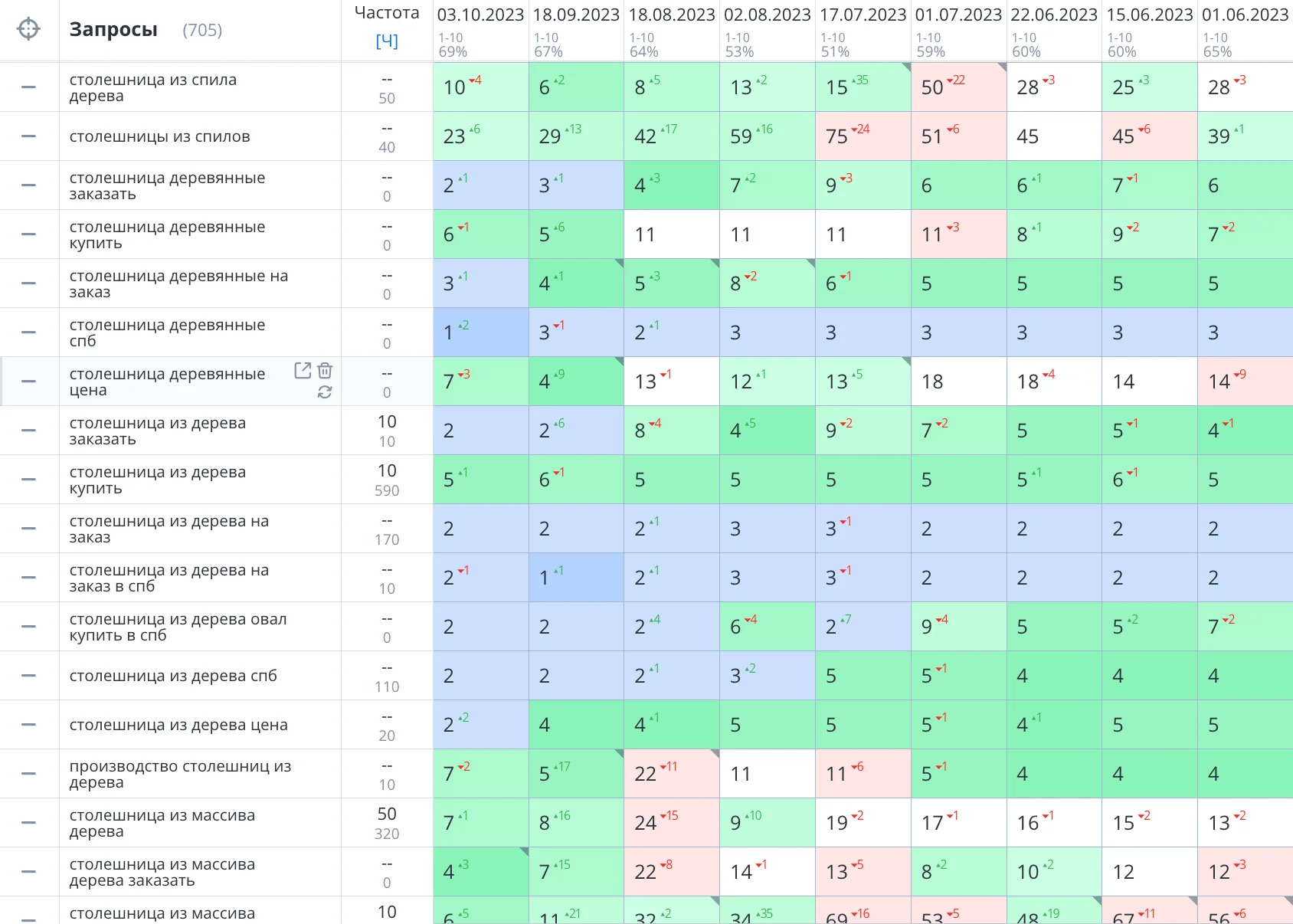
Over a year, organic traffic grew 63%, while the share of queries in Top 10 grew 27%. Growth was distributed across product-type, material, and use-case clusters.
| Metric | Result |
|---|---|
| Organic traffic over a year | +63% |
| Share of queries in Top 10 | +27% |
| Non-branded visibility | Growth across product clusters |
Metrics are transcribed from the original case materials. A period is stated where it is recorded in the source.
The project continues to develop in four areas:
- Add product photography and real examples of completed work, with descriptions of customer needs, to product and landing pages.
- Publish project case studies that build trust while buyers choose a supplier.
- Create regional landing pages for locations served and locally phrased searches.
- Build GEO visibility so the manufacturer appears in AI answers about custom furniture orders.
Related source: Source case